Thermometers | Thermal Cameras Inspection Service
Accurate temperature measurement is critical in maintenance, process control, electrical inspection, HVAC work, and quality assurance. When handheld thermometers and thermal cameras drift over time, the result can be incorrect diagnostics, missed hot spots, or unreliable inspection records. This is why a dedicated Thermometers | Thermal Cameras Inspection Service plays an important role in keeping temperature measurement equipment dependable in day-to-day industrial use.
This category covers inspection services for instruments used to capture surface temperature, detect thermal anomalies, and support preventive maintenance programs. It is relevant for teams working with infrared thermometers, thermal imaging cameras, and related temperature-checking tools that need periodic performance verification as part of a broader equipment inspection workflow.
Why inspection service matters for temperature measurement devices
Temperature instruments are often used in environments where decisions must be made quickly. A non-contact thermometer may be used to screen equipment surfaces, while a thermal camera can help identify overheating connections, insulation problems, or uneven heat distribution. In both cases, confidence in the reading is essential.
A structured inspection service helps verify whether the device is operating as expected, whether its measurement behavior remains stable, and whether it is still suitable for routine field use. For companies that rely on trend monitoring, maintenance documentation, or compliance-driven inspection routines, regular service can reduce uncertainty before it affects operations.
Typical instruments covered in this category
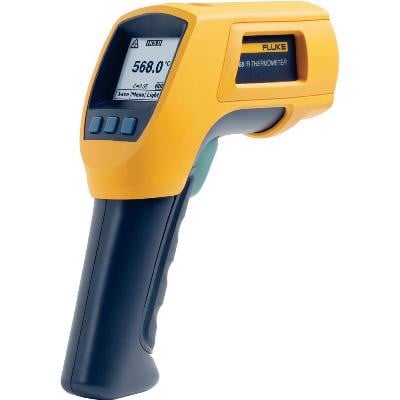
This service category is centered on temperature measurement and thermal imaging equipment rather than general-purpose electrical test tools. Common examples include infrared thermometers used for fast spot checks and thermal imaging cameras used for broader visual temperature analysis across panels, motors, piping, mechanical assemblies, and building systems.
Representative services in this category include the Flir Thermal Imaging Camera Inspection Service, the Fluke Thermal Imaging Camera Inspection Service, the Fluke InfraRed Thermometer Inspection Service, and the Omron InfraRed Thermometer Inspection Service. These examples show the range of supported equipment types, from handheld IR thermometers to more advanced imaging devices used in maintenance and troubleshooting.
Supported brands and service ecosystem
The category includes inspection services associated with widely used industrial brands such as FLIR, FLUKE, Chauvin Arnoux, Advanced Energy, KEYSIGHT, HIOKI, BOSCH, and OMRON. Different organizations standardize on different brands depending on application, internal procedures, and installed equipment, so having access to services across multiple manufacturers helps maintain consistency across the instrument fleet.
Thermal inspection tools are rarely used in isolation. In many maintenance environments, they complement electrical meters, specialty instruments, and other diagnostic tools. If your team is also managing broader test equipment verification, related support may be found under electrical and electronic meter inspection service or specialty meters inspection service.
How these services support preventive maintenance and troubleshooting
Infrared thermometers and thermal cameras are widely used because they allow temperature assessment without physical contact with energized, moving, or hard-to-reach surfaces. This makes them practical for routine screening of switchboards, bearings, motors, compressors, ducts, refrigeration systems, and process equipment. However, if the instrument itself is not performing properly, maintenance conclusions may become less reliable.
Inspection service helps support preventive maintenance by giving users greater confidence in repeatability and condition checks over time. For thermal imaging work, this is especially important when comparing heat patterns between inspections. For spot temperature tools, it helps maintain confidence during fast screening tasks where operators depend on immediate readings to flag abnormal conditions.
What to consider when choosing a service for thermometers and thermal cameras
The right service scope depends on the type of instrument and how it is used. A handheld infrared thermometer used for quick facility checks may require a different inspection approach than a thermal camera used for detailed condition monitoring reports. Buyers should consider the instrument category, operating environment, frequency of use, and the importance of traceable inspection records in their quality system.
It also helps to review whether your equipment portfolio includes a mix of temperature and non-temperature devices. In many facilities, thermal tools are part of a wider reliability program that may also involve gas safety checks or dimensional verification. In those cases, related categories such as gas detector and meter inspection service can provide a useful reference for building a more complete inspection plan.
Examples of service coverage within this category
Within this category, users can find inspection services tied to recognized equipment lines, including the Advanced Energy Thermal Imaging Camera Inspection Service, Chauvin Arnoux Thermal Imaging Camera Inspection Service, Keysight Thermal Imaging Camera Inspection Service, Hioki InfraRed Thermometer Inspection Service, and Bosch InfraRed Thermometer Inspection Service. These examples reflect the practical needs of maintenance teams, laboratories, utilities, contractors, and industrial plants that depend on temperature-related diagnostic tools.
Because the category spans both infrared thermometers and thermal imaging cameras, it supports different inspection workflows. Some users need a compact non-contact tool for rapid checks, while others require thermal imaging for visual analysis and fault localization. Grouping these services together makes it easier to manage inspection planning for equipment that serves a common temperature-monitoring purpose.
When to review or schedule inspection service
Inspection intervals often depend on usage intensity, internal quality requirements, and the criticality of the application. Devices used frequently in industrial environments, exposed to transport, impact, temperature variation, or demanding field conditions may need more regular attention than lightly used instruments kept in controlled settings.
It is also sensible to review service needs when readings appear inconsistent, when inspection documentation is required for customer or audit purposes, or when instruments are used in applications where incorrect temperature assessment could affect maintenance decisions. For organizations managing multiple device types, a consistent service schedule can improve traceability and reduce unplanned instrument downtime.
Choosing the right category for your equipment
If your requirement involves non-contact spot temperature tools or thermal imaging equipment, this category is the right starting point. It is designed for users looking for service support around thermal diagnostics and temperature inspection devices rather than general metrology as a whole.
For buyers maintaining mixed fleets of industrial test instruments, this category also fits naturally into a larger equipment inspection strategy. Reviewing the instrument type, the inspection objective, and the service history of each device will help narrow down the most suitable option. With the right inspection support in place, temperature measurement tools can continue to deliver dependable data for maintenance, safety, and operational decision-making.
Get exclusive volume discounts, bulk pricing updates, and new product alerts delivered directly to your inbox.
By subscribing, you agree to our Terms of Service and Privacy Policy.
Direct access to our certified experts