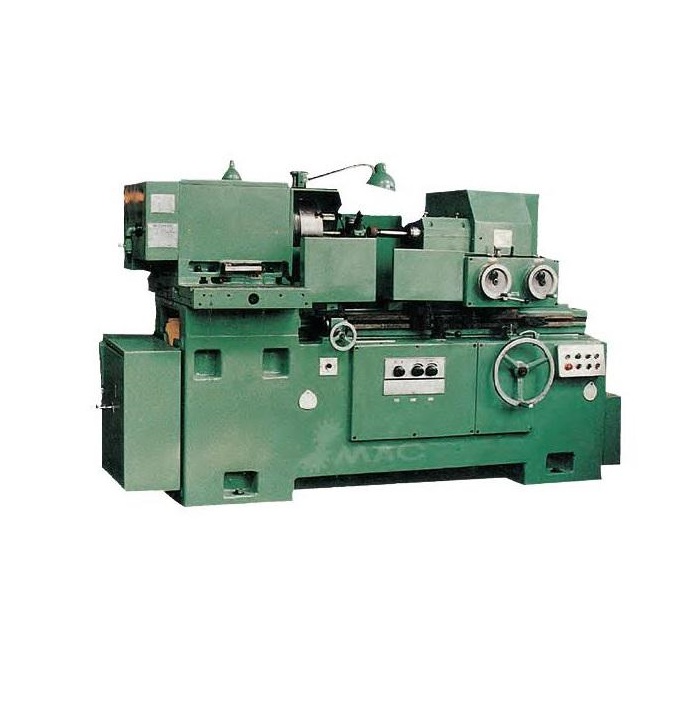
Centerless Grinder Repair Service
When a centerless grinder starts producing inconsistent diameters, poor surface finish, or unstable throughput, the problem is rarely isolated to a single part. In many production environments, accuracy depends on the condition of the grinding wheel, regulating wheel, support components, alignment, and overall machine stability. That is why Centerless Grinder Repair Service is typically approached as a practical maintenance and restoration task rather than a simple parts swap.
For manufacturers and maintenance teams, the goal is straightforward: restore reliable operation, reduce unplanned downtime, and bring the machine back to a condition that supports repeatable grinding performance. This category focuses on repair support for centerless grinding equipment, including service options related to SMAC systems where relevant.
Why centerless grinder repair matters in production
Centerless grinding is widely used when parts require consistent outside diameter control and efficient high-volume processing. Because the workpiece is supported differently from conventional cylindrical grinding, machine condition has a direct effect on roundness, surface quality, feeding behavior, and process stability.
Even small mechanical issues can gradually affect production results. Wear, vibration, alignment drift, or regulation problems may lead to scrap, frequent adjustments, and reduced confidence in the process. A structured repair service helps identify the real source of the problem and supports a more dependable return to operation.
Typical issues addressed during service
Centerless grinders are complex production machines, so repair needs can range from obvious faults to subtle performance degradation. In practice, service work often begins when operators notice inconsistent sizing, chatter marks, unstable feeding, or changes in surface finish that cannot be corrected through routine setup alone.
Repair evaluation may involve checking mechanical wear points, assessing wheel-related assemblies, reviewing machine motion and support condition, and confirming that the machine can hold the intended process consistently. For businesses running multiple machine types, related support may also be relevant in areas such as cutting machine repair service or shear machine repair service when broader shop-floor reliability is a concern.
What to look for in a centerless grinder repair scope
A useful repair scope should go beyond replacing visibly damaged parts. In industrial settings, a centerless grinder should be evaluated as a working system, including machine condition, operational symptoms, and the process requirements tied to the actual parts being produced.
Buyers and maintenance planners often prioritize support that helps with fault diagnosis, restoration of mechanical condition, and verification that the machine can operate with improved consistency after repair. This is especially important when the equipment is part of a continuous production line where interruptions can affect both output and downstream quality.
It is also worth considering whether the service is suited to the machine brand and application history. For example, the listed SMAC Centerless Grinder Repair Service provides a relevant reference point within this category for organizations using SMAC equipment.
SMAC-related repair support in this category
Within this category, SMAC is the featured manufacturer. For facilities operating SMAC centerless grinding equipment, brand-specific familiarity can be valuable during troubleshooting and repair planning, particularly when machine behavior must be evaluated in the context of the original system design.
Rather than focusing only on one symptom, service decisions are usually more effective when they consider the machine’s production history, current operating condition, and maintenance status. This helps determine whether the repair need is isolated, progressive, or linked to a broader wear pattern that may affect long-term reliability.
How repair service supports quality and uptime
In many factories, centerless grinders support repetitive, tolerance-sensitive work. When machine condition degrades, the first impact may be seen in higher inspection failures or increased operator intervention, but the larger cost often comes from reduced uptime and unpredictable output.
A well-targeted industrial machinery repair approach helps maintenance teams reduce recurring stoppages and improve process confidence. Repair work can also support better scheduling of preventive maintenance by clarifying which issues are urgent and which can be addressed during planned downtime. In facilities with mixed machinery, companies may also review related service categories such as hydraulic stamping machine repair service to align maintenance activity across production assets.
Choosing the right service option for your operation
The best repair path depends on the machine’s role in production, the severity of the fault, and whether the issue affects dimensional control, repeatability, or machine availability. Some users need corrective service for a specific breakdown, while others are looking for a deeper restoration plan for aging equipment that still plays an important role in the plant.
When comparing service options, it helps to define the symptoms clearly: whether the machine is drifting out of tolerance, showing abnormal vibration, struggling with feed stability, or producing inconsistent finish. A clear problem description makes it easier to match the repair requirement to the appropriate technical support and avoid unnecessary downtime.
Final considerations
Centerless grinding performance depends on more than setup alone. When machine condition begins to affect consistency, throughput, or part quality, a focused repair service can help restore stable operation and extend the useful life of critical equipment.
This category is intended for buyers and maintenance teams looking for practical support around centerless grinder repair, including SMAC-related service references where applicable. If your facility also manages other production equipment with similar uptime demands, reviewing adjacent repair categories can help build a more coordinated maintenance strategy across the shop floor.
Get exclusive volume discounts, bulk pricing updates, and new product alerts delivered directly to your inbox.
By subscribing, you agree to our Terms of Service and Privacy Policy.
Direct access to our certified experts