
Heat Staking Machine Repair Service
When a plastic joining process starts producing weak bonds, cosmetic defects, inconsistent cycle times, or frequent downtime, the issue often goes beyond simple wear parts. In many production lines, a fast and accurate response is essential to restore repeatability, protect tooling, and reduce scrap. That is where Heat Staking Machine Repair Service becomes important for manufacturers that rely on stable thermal forming and assembly performance.
This service category is intended for businesses that need practical support for diagnosing faults, restoring machine function, and improving the reliability of heat staking equipment used in assembly operations. Whether the problem appears in heating behavior, motion accuracy, pressure consistency, fixture alignment, or control response, a structured repair approach helps return the machine to dependable operation with less disruption to production.
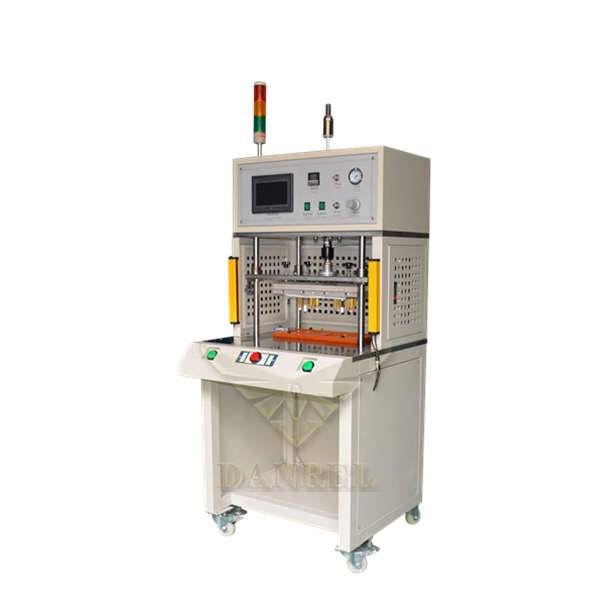
Why heat staking machine repair matters in production
Heat staking is widely used to join thermoplastic parts by reshaping a plastic stud or boss under controlled heat and force. Because the process depends on a careful balance of temperature, dwell time, alignment, and pressure, even small deviations can affect part quality. A machine that is slightly out of calibration may still run, but it can gradually introduce defects that increase rejection rates and rework.
Repair work is not only about fixing a breakdown after the machine stops. In many cases, it is also about addressing process instability before it develops into larger production losses. Typical warning signs include uneven stake formation, damaged plastic features, heater response drift, inconsistent cycle completion, or mechanical movement that no longer feels smooth and repeatable.
Common issues addressed during repair service
A heat staking machine combines thermal, mechanical, pneumatic or servo-driven, and electrical control elements. Because of that, failures can originate from several areas at once. A useful repair service should focus on finding the real source of the problem rather than only replacing the most visible damaged component.
Common service needs may include heater-related faults, temperature control irregularities, worn guides, actuator problems, fixture misalignment, sensor issues, wiring degradation, and control sequence errors. In some cases, the root cause is mechanical looseness that affects tool positioning; in others, it may be an electrical problem that causes unstable heating cycles. Restoring repeatable joining quality usually requires checking the machine as a complete system.
What a professional repair process typically includes
For industrial users, repair quality depends heavily on diagnosis. A proper service workflow usually starts with fault assessment, inspection of machine condition, and confirmation of the symptoms seen in production. From there, the service scope may include corrective maintenance, replacement of failed parts, mechanical adjustment, electrical troubleshooting, and functional testing after the repair is completed.
For this type of equipment, post-repair verification is especially important. It is not enough for the machine to power on; it should also operate with stable heating behavior, consistent motion, and acceptable process repeatability under normal production conditions. In many facilities, this helps reduce the risk of recurring faults shortly after the machine is returned to service.
Signs your heat staking machine may need service
Not every failure begins with a full machine stop. Many repair calls happen after a period of declining output quality or operator complaints. If the machine takes longer to reach operating condition, shows inconsistent stake profiles, produces visible surface damage, or requires frequent manual adjustment, those are often signs that service is needed.
Other indicators may include abnormal noise, unstable cycle timing, temperature overshoot, unexpected alarms, reduced pressure consistency, or poor alignment between tooling and workpiece. Responding early can help prevent damage to fixtures, tools, and surrounding machine components. For plants operating multiple types of forming equipment, related support may also be relevant for services such as mechanical power presser repair or hydraulic stamping machine repair when production lines include more than one joining or forming stage.
How to evaluate a repair service for heat staking equipment
Choosing the right repair support is often less about broad claims and more about technical fit. Industrial buyers typically look for service capability in fault isolation, machine restoration, and practical understanding of thermal joining equipment in production environments. The goal is to resolve the actual machine problem while minimizing the chance of repeated downtime.
It is also useful to consider whether the service approach matches your operating reality: single machine repair, urgent breakdown support, recurring maintenance needs, or line-wide reliability improvement. If your plant handles multiple process machines, related service categories such as cutting machine repair service and shear machine repair service may also be relevant when coordinating broader maintenance planning.
Repair service in the context of production reliability
In assembly and plastic processing environments, machine repair should support more than immediate recovery. It should help maintain stable output, predictable cycle performance, and safer daily operation. When heat staking equipment is repaired correctly, the benefit is often seen not only in restored machine availability but also in better process consistency and lower quality variation.
This is particularly important in operations where downstream inspection, assembly fit, or final product appearance depends on reliable plastic deformation. A repair service that considers heating, motion, alignment, and controls together can contribute to reduced scrap, smoother restart after downtime, and a more controlled production process overall.
Support for planned maintenance and fault recovery
Some repair needs are urgent, while others are identified during routine checks or performance reviews. In either case, service support is most effective when it helps maintenance teams understand the condition of the machine and the likely causes of failure. That makes it easier to plan follow-up actions, manage spare parts, and avoid repeating the same issue.
For businesses using heat staking equipment as part of a critical assembly stage, repair service can be an important part of wider equipment lifecycle management. Instead of waiting for a complete stoppage, many manufacturers use inspection and corrective repair to keep machines operating within acceptable process limits and to extend useful service life where practical.
Final considerations
Reliable thermal joining depends on a machine that can deliver controlled heat, force, and positioning cycle after cycle. When that consistency starts to decline, a focused repair approach helps identify the source of the problem and restore the equipment to stable working condition. For manufacturers that depend on uptime, part quality, and repeatable assembly results, Heat Staking Machine Repair Service is a practical category for finding the right technical support.
If you are reviewing service options, it is worth focusing on the symptoms seen in production, the machine functions most affected, and the level of repair support needed to return the equipment to dependable use. A clear understanding of those factors makes it easier to choose service that aligns with both immediate recovery and longer-term maintenance goals.
Get exclusive volume discounts, bulk pricing updates, and new product alerts delivered directly to your inbox.
By subscribing, you agree to our Terms of Service and Privacy Policy.
Direct access to our certified experts