Piper screw cutting machine Repair Service
When pipe threading equipment starts producing rough threads, inconsistent pitch, or unstable cutting performance, downtime can quickly affect installation schedules and workshop output. A reliable Piper screw cutting machine Repair Service helps restore cutting accuracy, feeding stability, and overall machine safety so pipe processing can continue with fewer interruptions.
This service category is intended for businesses that depend on pipe screw cutting machines in fabrication, maintenance, construction support, and mechanical workshops. Whether the issue involves worn cutting mechanisms, drive problems, alignment errors, or general performance decline after long operation, proper inspection and repair can extend equipment life and improve day-to-day reliability.
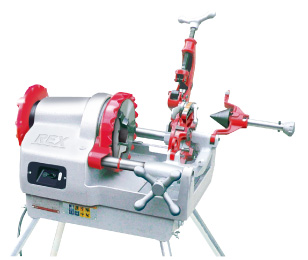
Why repair matters for pipe screw cutting equipment
Pipe screw cutting machines operate under repetitive mechanical load and require stable rotation, controlled feed, and accurate tool positioning to produce usable threads. Over time, normal wear can reduce thread quality, increase vibration, and create difficulties in clamping, feeding, or cutting. In many industrial settings, these issues appear gradually before they become serious enough to stop production.
A structured repair process focuses on the machine’s mechanical condition, functional movement, and operating consistency. Instead of replacing equipment too early, many users choose repair to recover performance, reduce unplanned stoppages, and maintain compatibility with their existing workflow.
Common signs a pipe screw cutting machine needs service
Early symptoms are often visible in the finished workpiece. If threads are uneven, damaged, or difficult to fit during assembly, the machine may need inspection. Operators may also notice abnormal noise, unstable motor behavior, excessive resistance during cutting, or difficulty maintaining smooth operation across repeated jobs.
Other warning signs include poor tool travel, misalignment between the pipe and cutting section, overheating during use, or looseness in moving parts. These problems do not always point to a single failed component, which is why a repair service typically begins with a broader technical assessment rather than a quick part swap.
Scope of a typical repair service
Repair work for this type of machinery usually starts with diagnosis of the machine’s operating condition and the source of the fault. From there, service may involve correction of worn assemblies, adjustment of feeding or clamping sections, restoration of transmission-related movement, and verification that the machine can return to stable operation under normal load.
For users working with METABO equipment, repair support may also be relevant when performance declines after long-term shop use. The listed METABO Pipe screw cutting machine Repair service is an example of support within this category, showing how brand-specific service can fit into a broader maintenance and repair requirement.
Choosing the right repair approach
Not every machine issue requires the same level of intervention. Some cases are centered on wear, adjustment, and recovery of normal movement, while others may involve deeper mechanical faults that affect the core cutting process. A useful repair service should therefore focus on fault diagnosis, practical restoration, and realistic evaluation of whether the machine can return to dependable use.
For buyers comparing service options, it helps to look at the machine’s operating history, severity of the fault, and the importance of thread accuracy in the application. If the equipment is part of a larger workshop process, repair planning should also consider how quickly the machine needs to be returned to production and whether related equipment may require attention at the same time.
Related repair needs in industrial workshops
Pipe screw cutting machines are often used alongside other fabrication and forming equipment, so maintenance decisions are rarely isolated. In facilities where multiple machine types support the same production line or service function, it may be helpful to review related categories such as cutting machine repair service or shear machine repair service.
This broader view can help maintenance teams reduce repeat stoppages, especially when equipment wear is linked to operating conditions, handling practices, or shared production demands. In some workshops, review of nearby machine groups may reveal similar service needs before they turn into larger breakdowns.
What businesses should prepare before requesting repair
Basic information can make the repair process more efficient. It is useful to identify the machine brand, current operating symptoms, recent performance changes, and whether the fault appears continuously or only under load. If the machine has already received temporary adjustments or partial maintenance, that history can also help narrow down the likely cause.
Photographs, operating notes, and examples of defective thread output can be practical references during service evaluation. This is especially important when machine problems involve intermittent cutting quality rather than total stoppage, since visible output issues often reveal alignment or motion-related faults more clearly than a simple verbal description.
When to consider broader machinery support
If your workshop handles several machine types and recurring maintenance issues, a single repair request may lead to a wider review of equipment condition. For example, facilities with pressing or forming equipment may also find value in services such as mechanical power presser repair service. Looking at machinery as part of one operating system often improves maintenance planning.
This approach is particularly relevant in industrial environments where machine uptime, operator safety, and dimensional consistency all matter. Rather than treating each repair as an isolated event, businesses can use repair activity to support more stable production over time.
Support focused on restoring usable performance
A good repair outcome is not just about getting the machine to turn on again. For pipe screw cutting equipment, the real goal is to recover threading reliability, smooth operation, and safe, repeatable performance in daily work. That means evaluating the machine as a working production asset, not only as a collection of parts.
If your equipment shows signs of wear, unstable cutting behavior, or declining output quality, this category helps you find a relevant industrial repair service for pipe screw cutting applications. With the right assessment and repair scope, businesses can often restore practical machine performance and keep essential workshop operations moving.
Get exclusive volume discounts, bulk pricing updates, and new product alerts delivered directly to your inbox.
By subscribing, you agree to our Terms of Service and Privacy Policy.
Direct access to our certified experts