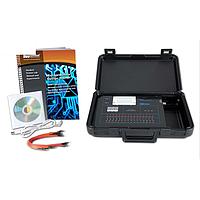
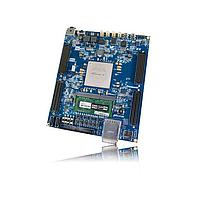
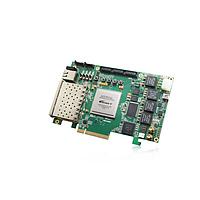
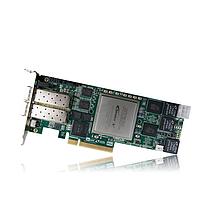
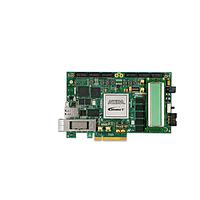
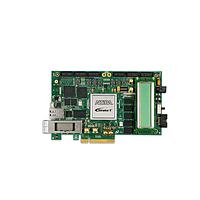
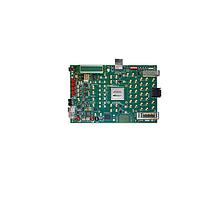
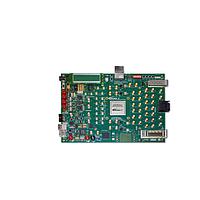
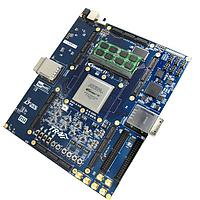
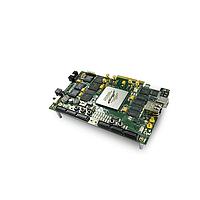
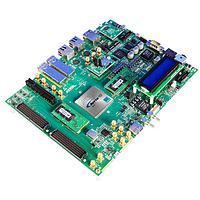
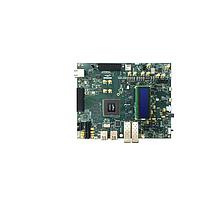
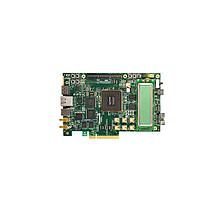
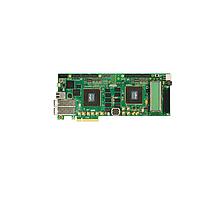
FPGA, CPLD, ASIC kit
Hands-on digital design work often moves quickly from theory to implementation. For universities, R&D labs, and technical training centers, the right FPGA, CPLD, ASIC kit helps bridge that gap by giving engineers and students a practical platform for logic design, verification, embedded interfacing, and prototype development.
This category brings together development and education platforms used for programmable logic learning, hardware experimentation, and early-stage system design. It covers compact entry-level boards, broader teaching kits, and more capable development platforms for projects that involve memory, communication interfaces, sensors, displays, or expansion I/O.
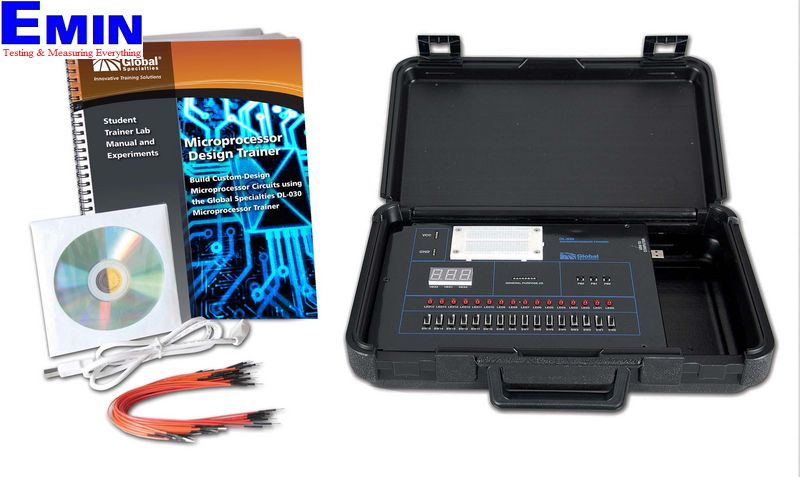
Where these kits fit in education and product development
Programmable logic platforms are widely used when software alone is not enough and custom digital hardware behavior is required. They support learning in areas such as combinational and sequential logic, state machines, timing analysis, bus interfacing, signal processing concepts, and hardware/software co-design.
In an academic setting, these kits are useful for laboratory exercises, capstone projects, and research prototypes. In industry-oriented training, they can be used to explore architecture trade-offs, test custom peripherals, or validate interface concepts before a dedicated ASIC path is considered. For broader lab environments, they may also complement information technology training where embedded systems and digital hardware overlap.
Typical platforms available in this category
The product range spans from starter-level learning tools to more advanced development boards. At the accessible end, the Arduino K000007 Arduino Starter Kit is not an FPGA board, but it is still relevant in this ecosystem as a practical companion for learning sensors, display handling, simple control logic, and I/O behavior before moving into programmable logic design. Kits with components such as LCD1602, LM35, IR receiver modules, LED displays, push buttons, and 74HC595 devices help build intuition around digital interfacing.
For dedicated FPGA work, Terasic appears prominently in this category with boards aimed at education, evaluation, and advanced development. Examples include the DE0-Nano Development and Education Board, DE10-Lite Board, Altera DE1 Board, and Altera DE2 Board, each suited to different levels of complexity and lab requirements.
More advanced options extend into larger memory resources, high-speed interfaces, Ethernet, PCIe-oriented form factors, ADC connectivity, and expansion connectors. Development kits such as the Terasic MAX 10 FPGA Development Kit, Altera Cyclone III FPGA Development Kit, and Altera Cyclone IV GX FPGA Development Kit are better aligned with deeper experimentation, structured coursework, and pre-prototype platform evaluation.
How FPGA, CPLD, and ASIC-oriented learning paths differ
FPGA platforms are generally the most flexible option for teaching and prototyping because the hardware can be reconfigured repeatedly. They are commonly chosen for logic design classes, digital signal workflows, communications experiments, and interface-heavy embedded projects.
CPLD-related development is typically associated with simpler deterministic control logic, glue logic replacement, startup sequencing, and interface management. In some kits, CPLDs appear as companion devices that support configuration or control functions around the main FPGA device rather than acting as the central processing fabric.
ASIC-oriented learning at the kit level usually focuses less on fabrication and more on front-end digital design skills that transfer into ASIC workflows. That includes HDL development, simulation discipline, timing awareness, verification methods, and hardware architecture planning. For institutions building structured lab programs, these platforms can also sit alongside application training resources for more targeted exercises.
Key features to evaluate before choosing a board
Selection should begin with the intended learning or development objective. If the goal is introductory digital design, a board with simple LEDs, switches, push buttons, seven-segment displays, and accessible GPIO is often enough. Boards such as the Terasic DE10-Lite Board or DE0-Nano fit well when users need manageable hardware plus room to explore memory, sensors, and external interfacing.
For more advanced work, it is worth reviewing the available logic capacity, onboard memory, programming method, clocking resources, analog capability, and expansion options. Some platforms in this category include USB-Blaster support, SDRAM, flash memory, accelerometers, ADC channels, VGA output, Ethernet, or HSMC and GPIO expansion. These features matter when moving from basic HDL exercises into image processing concepts, sensor acquisition, networking, or custom peripheral integration.
Powering and classroom usability also matter. Boards with onboard programming, straightforward USB connectivity, visible status indicators, and well-supported example designs are generally easier to deploy across labs, short courses, and student project teams.
Representative use cases across labs and training programs
In teaching environments, entry-level FPGA boards are commonly used for finite-state machine design, counters, display control, switch debouncing, timing exercises, and interface basics. Once students are comfortable with the workflow, they can progress toward memory controllers, sensor capture, soft-core processing concepts, or mixed peripheral projects.
Research teams may use these platforms to validate digital subsystems, prototype data paths, or explore communication behavior before committing to custom hardware. Boards with onboard ADC support, accelerometers, display interfaces, or external expansion can support practical demonstrations and early proof-of-concept work.
There is also value in pairing programmable logic with nearby training domains. For example, engineers working on instrumentation, embedded networking, or lab automation may find crossover value in related training areas such as basic practice equipment when projects combine electronics with physical measurement and experimental setups.
Examples from this category
The Terasic DE0-Nano Development and Education Board is a compact option for learning and small embedded logic projects, especially where users need GPIO access, onboard programming, memory, and sensor interfacing on a manageable platform. It suits introductory to mid-level digital design tasks without the overhead of a larger system board.
The Terasic DE10-Lite Board adds a practical mix of logic resources, ADC capability, user I/O, display elements, and Arduino Uno R3 style connectivity, making it a strong teaching platform for labs that want both FPGA practice and easier interaction with external components.
For broader lab exploration, boards such as the Terasic Altera DE1 Board and Altera DE2 Board provide richer peripheral sets including displays, memory, audio, communication interfaces, and expansion headers. Higher-end development kits in the Cyclone and MAX 10 families extend the category toward more demanding evaluation and prototyping tasks, including Ethernet, DDR memory, advanced clocking, and high-speed connectivity.
Choosing the right kit for your team
If your priority is introductory education, focus on simple bring-up, visible I/O, and approachable tool flow. If your work involves structured research or advanced coursework, consider boards with stronger memory architecture, analog support, communication interfaces, and expansion ecosystems.
It is also useful to think about continuity. A training program may start with sensor and microcontroller exercises using Arduino-based kits, then progress to FPGA boards from Terasic for HDL implementation and system-level integration. That staged approach helps learners move from basic interfacing toward more formal digital hardware design with less friction.
Final considerations
This category is designed for organizations that need practical platforms for digital design education, prototype validation, and programmable logic experimentation. Whether the requirement is a compact classroom board, a feature-rich lab platform, or a development kit with broader I/O and memory capability, the right choice depends on learning depth, interface needs, and the level of system complexity your team plans to handle.
By matching board features to actual project goals, buyers can build a more effective training or development environment and create a smoother path from basic logic exercises to real-world FPGA and ASIC-oriented design workflows.
Get exclusive volume discounts, bulk pricing updates, and new product alerts delivered directly to your inbox.
By subscribing, you agree to our Terms of Service and Privacy Policy.
Direct access to our certified experts