Circuit Breaker Tester
Reliable switching performance is critical in substations, transmission assets, industrial power systems, and protection maintenance programs. When a breaker opens or closes outside its expected timing window, the result can be poor fault clearing, unnecessary wear, or a wider reliability issue. A Circuit Breaker Tester helps maintenance teams verify operating time, contact behavior, coil performance, and mechanical movement so that breaker condition can be assessed with real data instead of assumption.
On this page you can explore instruments used for timing analysis and operational testing of circuit breakers, from compact field units to advanced analyzer platforms with multiple timing channels, travel inputs, and current measurement functions. These tools are commonly selected for commissioning, preventive maintenance, troubleshooting, and condition-based assessment in medium- and high-voltage environments.
Why circuit breaker testing matters in power maintenance
Circuit breakers are mechanical switching devices, so their condition cannot be evaluated only by visual inspection or nameplate data. Even when insulation and control wiring appear normal, the actual operating sequence may reveal delayed opening, contact bounce, phase mismatch, coil irregularities, or mechanism wear.
A dedicated breaker analyzer allows technicians to capture timing performance during open, close, and multi-step sequences such as C-O or O-C-O. In many maintenance workflows, breaker testing is also complemented by related electrical test methods such as withstand voltage testing or dielectric condition checks with a capacitance/tan δ meter, depending on the asset and test plan.
What a circuit breaker tester typically measures
Modern breaker test sets are designed to do more than simple open/close timing. Depending on the model, they can monitor main contacts, auxiliary contacts, trip and close coil current, and mechanism travel, while also controlling breaker operation through dedicated outputs. This helps users compare mechanical and electrical events within the same test record.
Common measurement areas in this category include:
- Contact timing for main and auxiliary contacts
- Detection of contact non-simultaneity between poles
- Analysis of contact bounce and sequence behavior
- Trip and close coil current measurement
- Travel and speed analysis using transducers
- Coil resistance or static resistance functions on selected analyzers
For field work in energized switchyards or remote locations, users often look closely at channel count, isolation, control outputs, portability, and whether the instrument supports battery operation.
Typical product types in this category
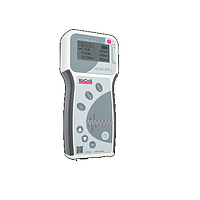
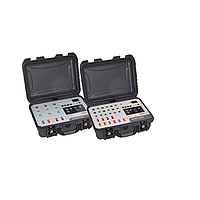
The range of instruments in this category covers both straightforward timer units and more advanced operational analyzers. A compact option may focus on timing channels and auxiliary inputs for standard breaker tests, while a larger analyzer can add travel transducer support, multiple coil current channels, and expanded control logic for detailed mechanical assessment.
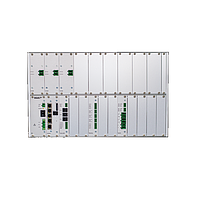
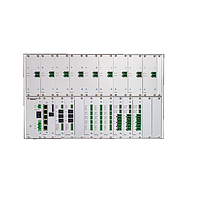
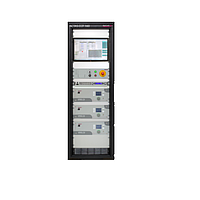
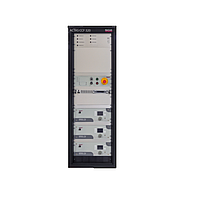
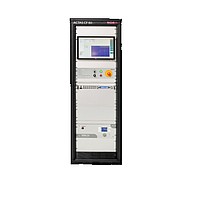
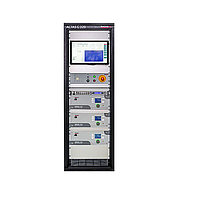
Examples from this category include the MEGGER EGIL Circuit Breaker Analyzer, which is suited to timing and breaker operation analysis, as well as the MOTWANE MCBO-A and MOTWANE MCBOA Plus platforms for broader operational analysis. For users who need different channel configurations, the DV Power CAT series includes models such as CAT500-03-01, CAT500-06-01, CAT500-12-01, CAT100-03-01, CAT100-06-01, CAT100-B3-01, CAT100-B6-01, and CAT250-12-01, covering a range of timing-channel and mobility requirements.
How to choose the right breaker analyzer
The best fit usually depends on the type of breaker, the depth of diagnosis required, and the working environment. For routine timing verification, a lighter unit with core timing and auxiliary channels may be sufficient. For detailed maintenance on high-value assets, users often prefer instruments that combine timing, current, travel, and control functions in one platform.
When comparing options, it is practical to review a few key points:
- Number of main timing channels needed per phase or per breaker configuration
- Support for dry and wet auxiliary contact sensing
- Availability of coil current measurement and breaker control outputs
- Travel transducer compatibility for speed and motion analysis
- Required test sequences, data resolution, and reporting workflow
- Portability, mains supply range, and whether battery operation is useful on site
For example, the DV Power CAT100-B6-01 is relevant when portability and battery-supported field testing are priorities, while the DV Power CAT500-12-01 or CAT250-12-01 may be more suitable when higher channel count and expanded analysis functions are needed. Users working across different asset conditions may also consider established manufacturer ecosystems from MEGGER, DV Power, and MOTWANE to align service procedures and accessories.
Applications across substations and industrial power systems
Breaker analyzers are widely used during commissioning of new installations, after repair or overhaul, and as part of planned shutdown maintenance. In utility environments, they support testing of transmission and distribution breakers where phase synchronism and operating speed directly affect protection performance. In industrial plants, they help verify switching reliability on critical feeders and process power systems.
Where gas-insulated switchgear is involved, breaker timing analysis may be carried out alongside condition checks using an SF6 gas analyzer. In broader test programs, breaker maintenance can also be coordinated with equipment such as a high-voltage step-up transformer when higher-voltage test procedures are required elsewhere in the asset verification workflow.
Leading brands represented in this category
This category includes instruments from recognized manufacturers used in electrical testing and substation maintenance. Frequently referenced names here include MEGGER, DV Power, and MOTWANE, each offering different approaches to breaker timing and operational analysis. The broader manufacturer lineup also includes Doble, EuroSMC, Kocos, SKB EP, and others listed for users who compare platform style, test philosophy, and service preferences.
Not every project requires the same feature set. Some teams prioritize compact operation and fast setup, while others need advanced analysis with multi-channel current, travel, and resistance capabilities. Reviewing the available models in the context of your breaker type, maintenance procedure, and reporting requirements is usually the most efficient way to shortlist the right tester.
Practical selection notes for B2B buyers
For engineering teams, EPC contractors, utility maintenance groups, and industrial service providers, the purchase decision is rarely based on one headline specification. It often depends on how well the instrument fits the existing test process, the skills of the field crew, and the number of breaker variants that must be supported.
It is worth checking whether your workflow needs a simple timer, a full analyzer, or a more comprehensive package that can support coil current, transducer inputs, and breaker control in one setup. Accessories, software workflow, transport format, and on-site usability can be just as important as raw channel count, especially for recurring field maintenance programs.
Final thoughts
Choosing a suitable circuit breaker tester is ultimately about matching the instrument to the breaker technology, the maintenance objective, and the level of diagnostic detail your team needs. Whether you are performing routine timing checks or in-depth mechanism analysis, this category brings together practical options for field and workshop use.
Explore the listed analyzers and timers to compare channel configuration, operational testing capability, and portability. A well-matched test set can improve maintenance quality, support clearer condition assessment, and help reduce uncertainty during breaker commissioning and service.
Get exclusive volume discounts, bulk pricing updates, and new product alerts delivered directly to your inbox.
By subscribing, you agree to our Terms of Service and Privacy Policy.
Direct access to our certified experts