
Cable Fault Tester Calibration Service
Accurate cable fault location depends not only on the capability of the instrument, but also on how reliably it measures, captures, and interprets test signals in real operating conditions. In utility work, industrial maintenance, and field troubleshooting, even a small measurement drift can affect fault distance estimation, waveform interpretation, and confidence in the final diagnosis. That is why a professional Cable Fault Tester Calibration Service plays an important role in maintaining dependable test performance.
This service is relevant for organizations that rely on cable fault testers to identify insulation issues, locate open or short conditions, and support maintenance planning for power and control cable networks. Regular calibration helps confirm that the instrument remains aligned with expected measurement behavior, reducing uncertainty during critical testing tasks.
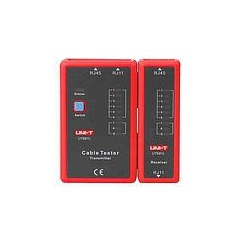
Why calibration matters for cable fault testers
Cable fault testers are used in applications where measurement accuracy directly affects troubleshooting efficiency. If the tester indicates an incorrect fault distance or produces unstable waveform results, technicians may spend more time investigating the wrong cable section or repeating tests under difficult field conditions. Calibration helps verify that the instrument is performing within its intended measurement characteristics.
For maintenance teams, calibration is also part of a broader quality and traceability process. It supports confidence in reported results, helps standardize testing practices across multiple instruments, and can be especially useful in environments where equipment condition records and service documentation are closely managed.
What this service typically supports
A calibration service for cable fault testers is generally intended to evaluate whether the instrument responds correctly under controlled reference conditions. Depending on the tester design, this may involve checking key measurement behavior related to signal generation, detection, timing, or displayed values used during cable fault analysis. The goal is not simply to power on the unit, but to assess whether the readings remain consistent and suitable for technical use.
In practice, calibration can help identify gradual performance shifts that may not be obvious during routine field operation. Instruments often continue functioning even when their measurement confidence has degraded. Detecting this early helps users plan adjustment, maintenance, or further inspection before inaccurate results begin affecting diagnostic work.
When to schedule cable fault tester calibration
Calibration intervals are usually determined by usage frequency, operating environment, internal quality procedures, and the criticality of the testing task. Organizations that use cable fault testers regularly in field service, utility maintenance, or demanding industrial environments often benefit from periodic review to ensure continued reliability.
It can also be sensible to schedule service after heavy transportation, suspected impact, repair, unusually harsh environmental exposure, or whenever test results appear inconsistent with known cable conditions. If your workflow includes related electrical test instruments, it may be helpful to review services such as low resistance meter calibration as part of a broader maintenance program.
Typical applications that benefit from reliable calibration
Well-calibrated cable fault testers are important in many sectors where underground, installed, or difficult-to-access cables must be assessed efficiently. This includes power distribution systems, industrial plants, facility infrastructure, transport networks, and maintenance operations where downtime can be costly. In these settings, dependable measurements support faster fault isolation and more consistent decision-making.
Calibration is particularly valuable when instruments are used as part of a larger electrical testing workflow. For example, teams working on insulation condition or high-voltage verification may also need related services such as withstand voltage test calibration or insulating materials testing equipment calibration, depending on the methods used in their maintenance process.
How calibration supports maintenance quality and traceability
Beyond instrument accuracy, traceability is often a key reason organizations request calibration. A documented calibration process helps create a clearer service history for each tester, making it easier to manage equipment fleets, support audits, and align internal maintenance records with quality requirements. This is especially useful for companies that operate across multiple sites or rely on scheduled test programs.
Calibration records can also support better asset decisions over time. When service data shows recurring drift, instability, or repeated out-of-tolerance behavior, maintenance teams can make more informed choices about repair, replacement, or application reassignment. In that sense, calibration is not only a compliance task, but also a practical tool for equipment lifecycle management.
Choosing the right service scope
Not every instrument is used the same way, so the right service scope depends on the tester’s role in your operation. A unit used occasionally for preliminary fault checks may have different service priorities than one used routinely for formal diagnostic work. Understanding how the instrument is applied, how often it is transported, and how critical the measurement result is can help determine an appropriate calibration schedule.
For organizations managing a wider portfolio of electrical test equipment, it may also be useful to coordinate calibration planning across adjacent instruments. In some cases, that includes services for breaker test equipment alongside cable and insulation-related testers, helping reduce service gaps across the overall test environment.
Supporting dependable field diagnostics
Field troubleshooting often happens under time pressure, with limited access, incomplete historical data, and operational constraints. In those conditions, technicians need test equipment they can trust. A properly maintained and calibrated cable fault tester helps reduce avoidable uncertainty and supports more efficient fault localization when fast decisions are required.
Whether the instrument is used in planned maintenance or urgent outage response, consistent measurement performance is fundamental. A structured verification and calibration process helps confirm that the tester remains suitable for technical work and supports more reliable outcomes across day-to-day electrical maintenance activities.
Conclusion
Reliable cable fault testing starts with confidence in the instrument itself. A professional Cable Fault Tester Calibration Service helps organizations maintain measurement consistency, improve traceability, and support better troubleshooting decisions in the field. If cable diagnostics are part of your maintenance workflow, regular calibration is a practical step toward more dependable testing and better long-term equipment management.
Get exclusive volume discounts, bulk pricing updates, and new product alerts delivered directly to your inbox.
By subscribing, you agree to our Terms of Service and Privacy Policy.
Direct access to our certified experts