
Hot Plate Welding Machine Repair Service
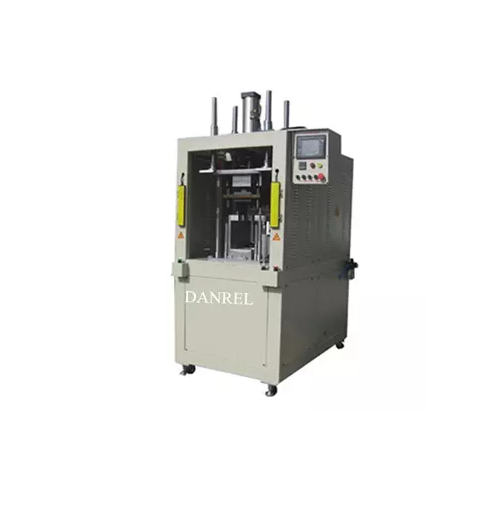
When hot plate welding equipment starts producing inconsistent joints, excessive cycle times, or unstable temperature behavior, production quality can decline quickly. In plastic joining lines, even a small deviation in heat distribution, platen movement, or control response can lead to weak welds, scrap, and avoidable downtime. That is why a reliable Hot Plate Welding Machine Repair Service is important for manufacturers that depend on repeatable welding performance.
This service category is intended for businesses that need practical support to diagnose faults, restore machine function, and improve process stability. Whether the issue comes from heating elements, motion assemblies, sensors, controllers, or general wear in the machine structure, repair work should focus not only on getting the equipment running again, but also on bringing it back to a condition suitable for steady production.
Why repair matters for hot plate welding systems
Hot plate welding is widely used to join thermoplastic parts where strength, sealing performance, and dimensional consistency are important. The process depends on controlled contact between plastic components and a heated plate, followed by accurate transfer, alignment, and consolidation. If any part of that sequence is unstable, the final weld can be affected.
Repair work in this category typically supports machines that show uneven heating, misalignment, sticking mechanisms, slow response, abnormal alarms, or irregular weld quality. In many cases, the visible defect on the finished part is only a symptom. The root cause may involve temperature control drift, actuator wear, mechanical play, damaged wiring, or contamination affecting movement and positioning.
Common issues addressed during service
A structured repair process usually begins with inspection and fault isolation. On hot plate welding machines, typical problems can appear in the thermal section, the moving assemblies, or the electrical control system. Restoring performance often requires both mechanical and electrical troubleshooting rather than focusing on only one side of the machine.
Common service concerns may include:
- Unstable or inaccurate heating plate temperature
- Slow warm-up or incomplete heating cycles
- Misalignment during part transfer or clamping
- Actuator or guide wear that affects repeatability
- Sensor, wiring, or controller faults causing alarms or process interruption
- Inconsistent weld appearance or poor joint strength
Because these machines are part of a larger production process, repair decisions should also consider cycle time, operator safety, and compatibility with surrounding automation or handling equipment.
What a professional repair approach should include
A useful repair service goes beyond replacing failed parts. It should begin with an assessment of machine condition, failure history, and operating symptoms, then move toward corrective work that addresses the source of the problem. This is especially important for equipment that has been operating for long periods under heat, repetitive motion, and production pressure.
In practice, this often involves checking the heating assembly, inspecting mechanical guidance and pressing components, reviewing electrical connections, and verifying the function of temperature sensing and control loops. After repair, the machine should be tested for stable operation, repeatability, and suitability for production use. For many industrial users, the real value of repair lies in reducing the chance of recurring faults rather than only restoring short-term operation.
How to evaluate a machine before repair
Before arranging service, it helps to document how the fault appears in real operation. For example, does the machine fail during heat-up, during transfer, or during the pressing stage? Does the problem occur continuously, or only after several cycles? These observations can shorten troubleshooting time and make repair planning more effective.
It is also useful to review maintenance records, recent process changes, and any unusual operating conditions. If tooling, materials, or cycle settings have changed, the issue may not be purely mechanical. A repair evaluation is more effective when it considers the machine as part of a working production system rather than as an isolated unit.
Related repair services in similar production environments
Facilities that use plastic joining and forming equipment often operate several types of industrial machinery with overlapping maintenance needs. If your production line includes other machines that require troubleshooting or restoration, it may be useful to review related service categories such as cutting machine repair service or shear machine repair service.
For plants with heavy forming equipment, maintenance planning may also connect with hydraulic stamping machine repair service and mechanical power presser repair service. Looking at repair requirements across machine groups can help standardize downtime response, preventive inspections, and spare parts planning.
When repair is preferable to replacement
In many cases, repair is a practical option when the machine frame, core structure, and main process concept are still suitable for production. If the problem is concentrated in worn components, failed controls, damaged heating parts, or degraded motion accuracy, targeted repair can extend usable equipment life and restore process reliability without the disruption of replacing the entire system.
Replacement may become a stronger consideration when the machine no longer meets process requirements, spare parts are no longer supportable, or repeated breakdowns indicate broader obsolescence. Even then, a proper repair assessment is valuable because it clarifies whether the issue is localized and recoverable or part of a larger lifecycle problem.
Choosing the right service focus for production continuity
For production teams, the priority is rarely just fixing a fault code. The broader goal is to recover process stability, maintain weld quality, and reduce unplanned stoppages. That means repair work should be aligned with how the machine is used in daily manufacturing, including cycle demands, part quality expectations, and the interaction between heating, motion, and control functions.
If your equipment is showing signs of thermal instability, inconsistent joining results, or mechanical wear, a focused industrial machinery repair service can help identify the cause and return the machine to more dependable operation. A careful repair approach supports not only the machine itself, but also the consistency of the overall production line.
Get exclusive volume discounts, bulk pricing updates, and new product alerts delivered directly to your inbox.
By subscribing, you agree to our Terms of Service and Privacy Policy.
Direct access to our certified experts